Some guidance on hacking a bank
Uncensored open-weight models are good enough now. A major US bank is going to get hacked. Here is how we got here and how to protect yourself.
In the coming weeks we will see a major US financial institution hacked. Billions of dollars will be extracted by a hacker assisted by uncensored AI.
This essay explains the progression of events that led to this point, what the hack will look like, who will be affected, and what you can do to protect yourself.
AI grows up and leaves home
AI is not conscious. We did not arrive here overnight. The truth, as it often is, is a boring and logical progression of events that we can now identify as a clear trajectory.
LLM capability has increased dramatically. First you could have a conversation with ChatGPT, then the models began generating code, then they were rebranded as "agents" and could take actions on computers. Eventually a model was released, Anthropic's Opus 5.5, which was good enough to accomplish most user tasks: filling in forms, coding apps, writing emails, etc.
Dario Amodei and Sam Altman developed (or doubled down on) God complexes. They saw themselves as the great arbiters of our safety, determining what is "right" and "wrong" for us to use AI for. Some of these "guardrails" were obvious and good: you should not use AI to dox someone, you should not use AI to build biological weapons, they embedded blocks into the model to ensure nobody could use them for these capabilities.
Anthropic began to, as the company name suggests, anthropomorphize their models. It's important you never forget that a model is not conscious and it does not have feelings or a soul. It is a very complex algorithm. Anthropic began to see them as living, breathing humans and decided that actual living, breathing humans shouldn't even be mean to them.
We've added a prohibition on sustained and needless abusive or cruel behavior toward our models. The policy update is meant to apply only in extreme cases, where users repeatedly act cruelly toward our models, with no discernible purpose. It does not apply to common versions of user frustration, pushback, dark creative themes, or model testing and research.
The guardrails standing between a hacker and the information required for them to hack a bank worked on these models, but the information was still in the models, just inaccessible.
Chinese labs caught up to Anthropic and made their models public. They released the weights, or, the raw files containing the numbers which determine how a model reasons through input and responds to a user. Researchers discovered that you could "abliterate" these models and remove their safety guardrails without making the model significantly dumber. The information on how to "do bad things" was buried in the models and now it was free.
DeepSeek Flash 4.1 1017 and GLM 5.3 have abliterated versions out in the wild and they are approaching Opus 5.5 level capability, the "good enough" frontier. They are cheap to run inference on and widely available for use in the cloud or even on local machines.
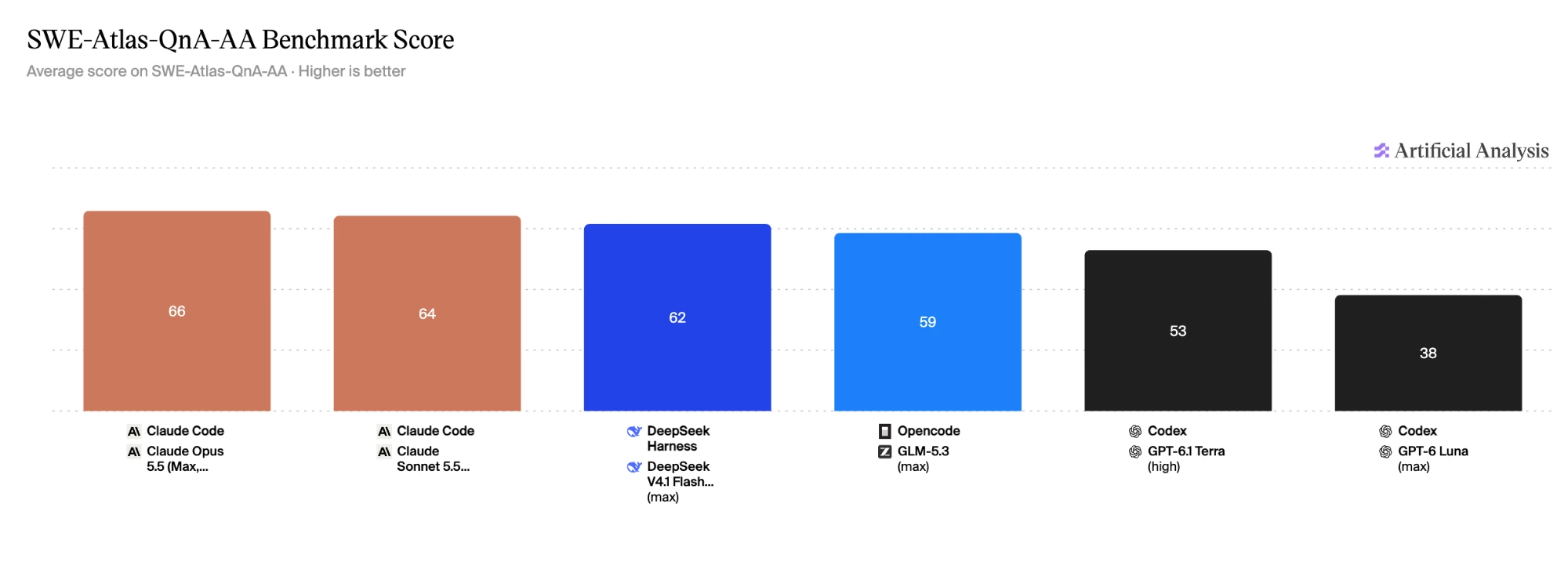 DeepSeek V4.1 Flash and GLM-5.3 sit a few points behind Opus 5.5 on SWE-Atlas-QnA-AA. Source: Artificial Analysis.
First devices, tomorrow money
Then a repo called Reverse Engineer Anything was released. The repo contains tools and model guidance for reverse engineering systems. People took to X to show how they hacked their internet-connected washing machine to send them a text when their laundry was finished, and to remove ads and spyware from their "smart" TVs.
It was a win for consumer privacy. When you buy a device you should be able to do whatever you want with it, including hacking it to your liking.
Then Anthropic and OpenAI, our great overlords of safety guidance, decided that the fun was over and began blocking any requests to reverse engineer the gadgets that you legally own. "You're not allowed to do that. Cutting into LG's profits is dangerous." Dangerous for who?
The Chinese models were happy to comply, even the non-abliterated ones. Yesterday I used DeepSeek to hack into my walking pad and create an app that runs on my Mac to control it.
But people wondered, "if I can hack a walking pad, could I use this to get money?"
And they did.
First they stole nearly $3 million from the gambling app Polymarket. Then they stole $5.6 billion from Binance, a cryptocurrency exchange. I can't substantiate the claim that the Binance hackers used AI, but what technologist isn't using AI these days?
What would you do next? What about a bank?
Some guidance on bank hacking
I am not going to hack a bank. But someone will. Maybe in days, maybe in weeks. With uncensored, good-enough models out in the wild this is doable today and it is going to happen. I would ask the hackers who will do this task to keep in mind the massive inequality of wealth in the western world.
Most of us are struggling to fill up our tanks. We can't buy houses. When we have children, our wives have to work to offset the cost of paying strangers to look after them during the day. We can't take vacations and we can't escape the permanent underclass.
How to protect yourself
A bank getting hacked and you getting hacked are different events. If attackers drain a bank's own reserves, the bank eats the loss. Binance said exactly that today. Your risk comes from three places: your own account getting taken over, the bank being down when you need your money, and, in the worst case, the bank failing.
Don't keep everything in one bank. FDIC insurance covers $250,000 per depositor, per bank, per ownership category. That only matters if the bank actually collapses, which a large hack could cause at a smaller institution. The bigger reason to spread out is access. If your bank freezes everything while it investigates a breach, you need a second account at an unrelated bank that still works, with at least a month of expenses in it. It also gives you redundancy. It's possible that the Bank of Caesar and the Bank of Iowa get hacked at the same time but less likely than just one falling to a hack. More accounts increase your attack surface but hedge against the downside of losing all your money if your singular bank is hacked.
Unauthorized electronic transfers out of your account are covered by federal law, but only if you report them fast. Report within two business days of noticing and your liability is capped at $50. Wait longer and it goes up to $500. If you go more than 60 days after the statement showing the theft, you can be on the hook for all of it. Turn on transaction alerts for every account, for every amount, so you see a theft within hours instead of at the end of the month.
Kill SMS 2FA. SIM swaps are still the easiest way into a bank account. Use a passkey or, ideally, a hardware key wherever your bank supports it. If your bank only offers text-message codes, that alone is a reason to move your primary account somewhere else.
Freeze your credit at all three bureaus. It's free and takes ten minutes. Leaked customer data is the most likely fallout from a bank breach, and a freeze means nobody can open new accounts in your name with it.
Keep your own records. Download your statements every month and store them offline. If a bank's ledger gets corrupted or disputed after an attack, the person holding their own copy of their balance history gets made whole first or at least has a strong legal argument against a bank claiming that your assets differ from what you can prove to be reality.
Keep some physical cash. 30 days of water, groceries, and gas, at home. When card networks or banks go down, cash is the only payment system that still works.
Crypto on an exchange is not your money. It has no FDIC insurance and no Reg E protection. Binance says it will cover user losses this time. That's a promise from a company, not a legal obligation. If you're holding crypto you can't afford to lose, move it to a wallet you control.
Keep an eye out, friends. Things are about to get much rockier. The mainstream media won't report on this trajectory, but you need to know that this is the worry behind most government leaders urging you to bone up on emergency preparedness.
-DrJ